

Cosun 1 / Suikerunie
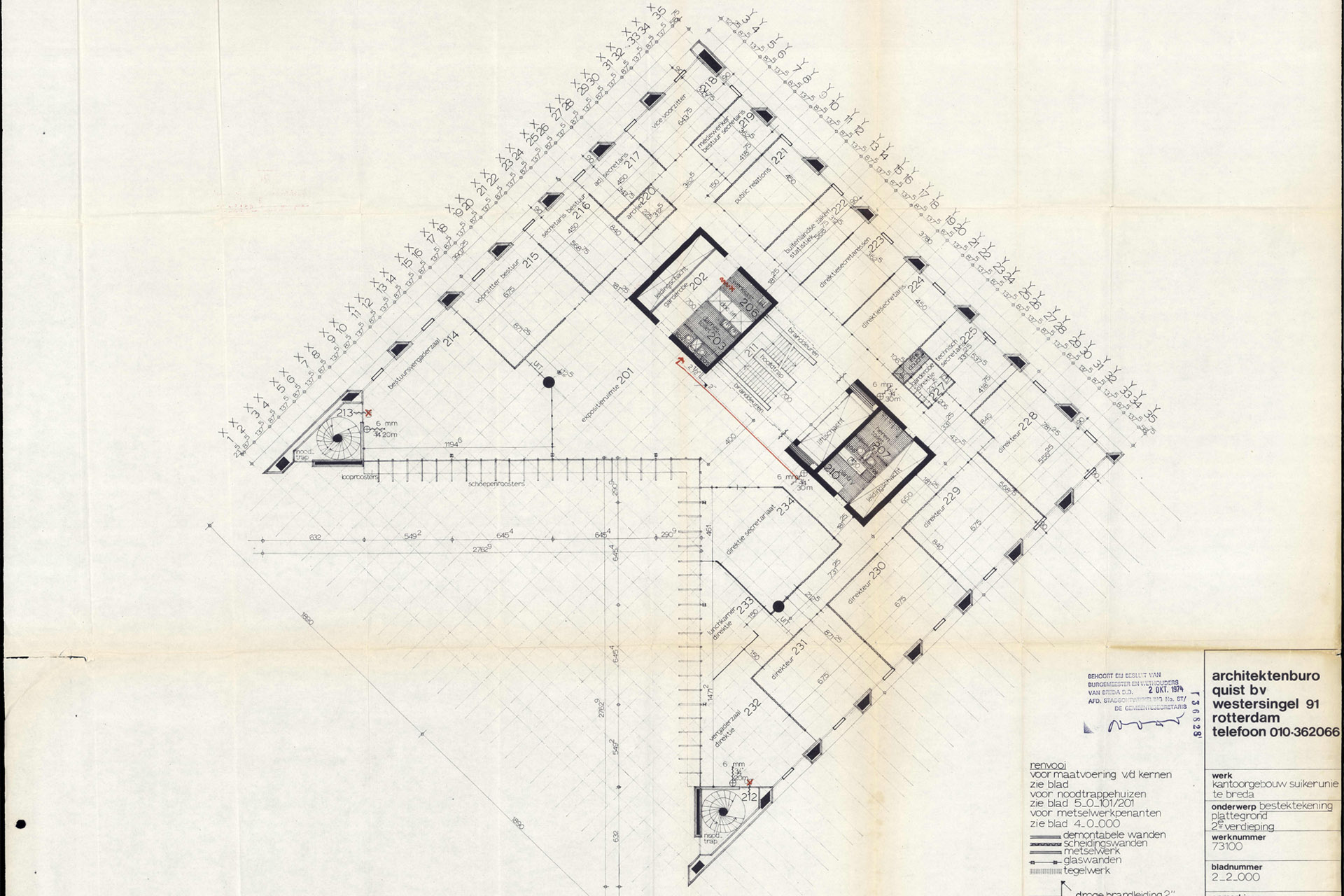
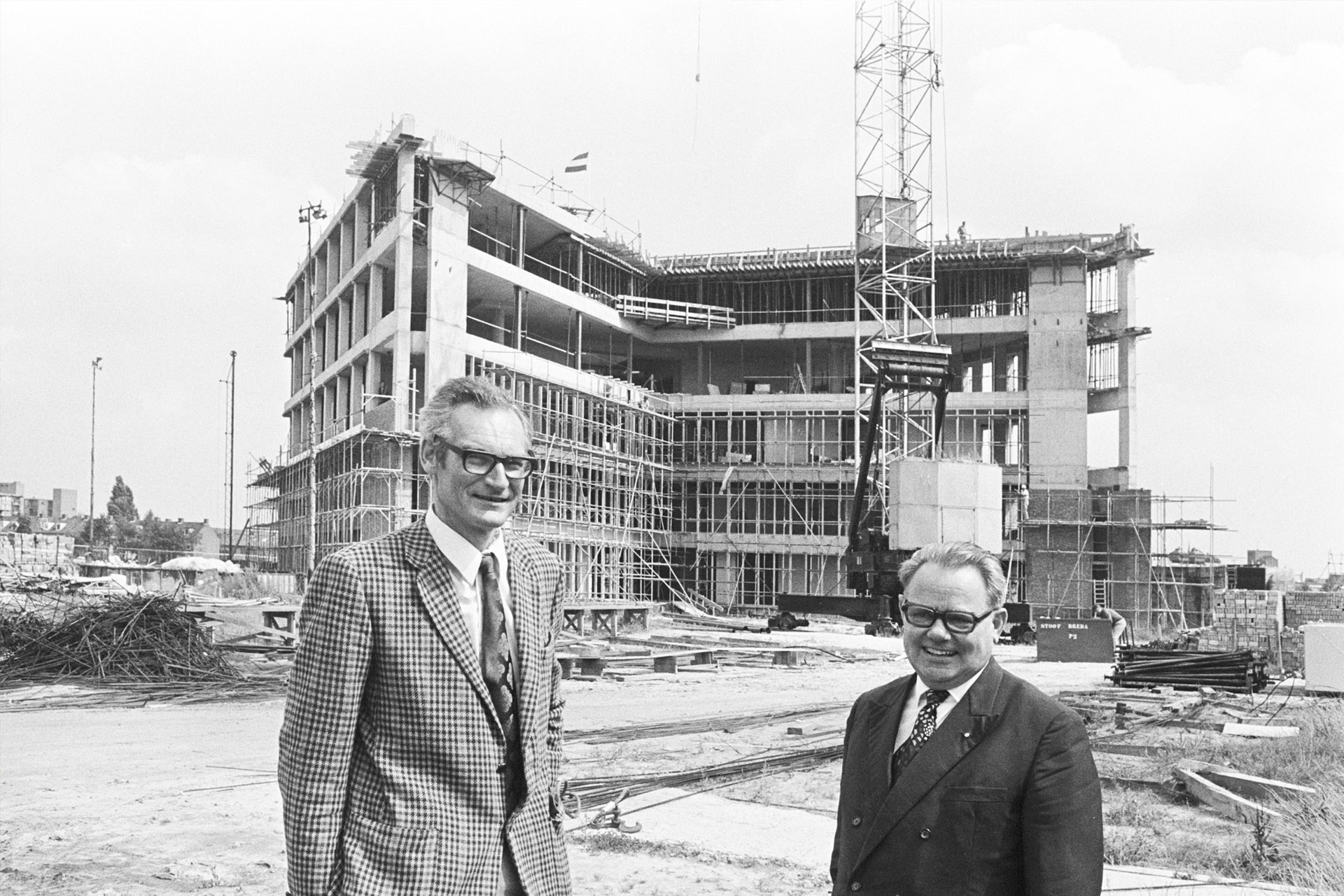
In the 1970s, Koninklijke Coöperatieve Cosun U.A. (Royal Cosun / the Dutch Sugar Union) sought a new headquarters in Breda. The site they acquired is located on the western edge of the city, where surrounding residential neighborhoods had yet to be developed. Cosun commissioned Wim Quist to design a fitting headquarters, which was completed around 1975. The original design provided access from the west via an entrance gate flanked by a garage and gatehouse, leading into a green, park-like setting. Employees and visitors were guided to the main entrance, located in the southwest corner of the building. The building’s diagonal orientation on the plot results from this layout, creating a carefully composed ensemble of landscaping, artworks, and structures.
For over twenty years, the situation remained largely unchanged. To the north and east, a residential area and a police station were subsequently built. Around the turn of the century, the site was densified, with plans for four office buildings, of which two were ultimately realized. In 2011, Cosun / Suikerunie vacated the headquarters, leaving the building empty. The garage and gatehouse have since been demolished, the artworks removed, the ground level largely occupied by low-quality parking, and the Zuilenstraat, which once connected the park, no longer exists.
In the coming years, the Cosun site will be revitalized and transformed into a residential area. Parking will be located underground, and the new homes will be set within a park. Cosun 1 / Suikerunie marks the first step in this transformation.
Heritage Assessment
In addition to a formal heritage assessment conducted by the municipality, we gathered documentation from various books, the municipal drawing archive of Breda, and visited Wim Quist several times to discuss the building and our plans. This allowed us to establish clear guiding principles and points of attention for the transformation.
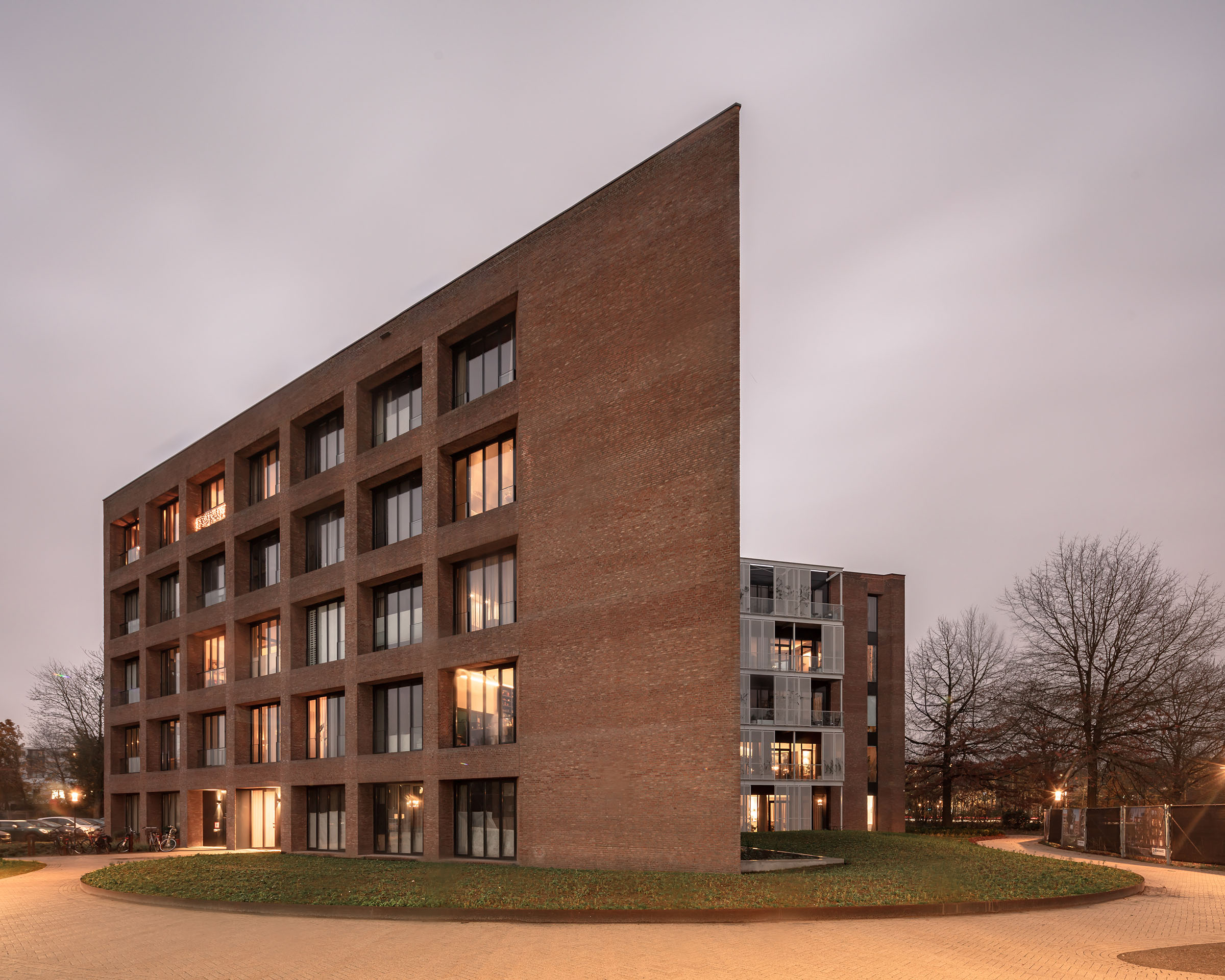
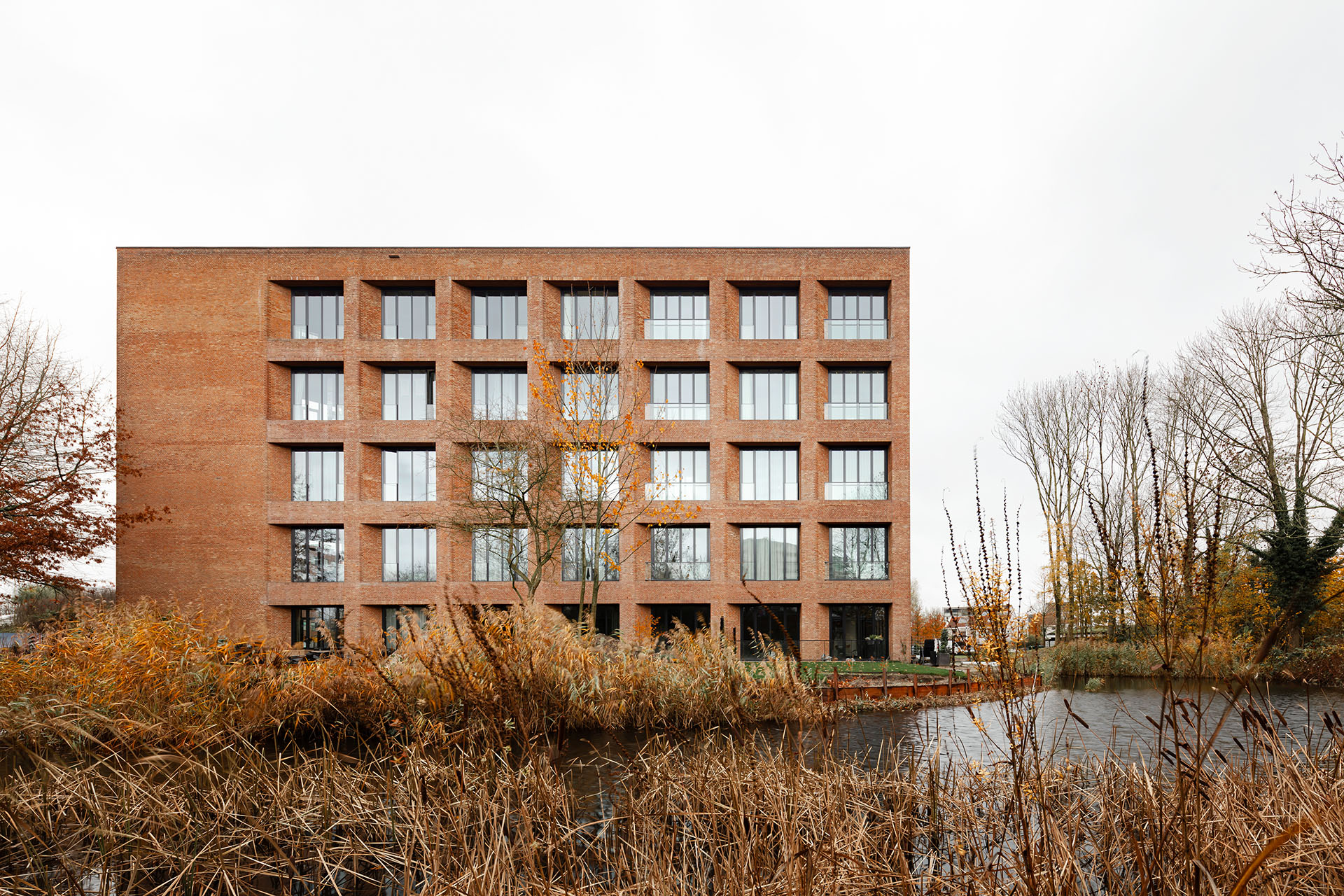
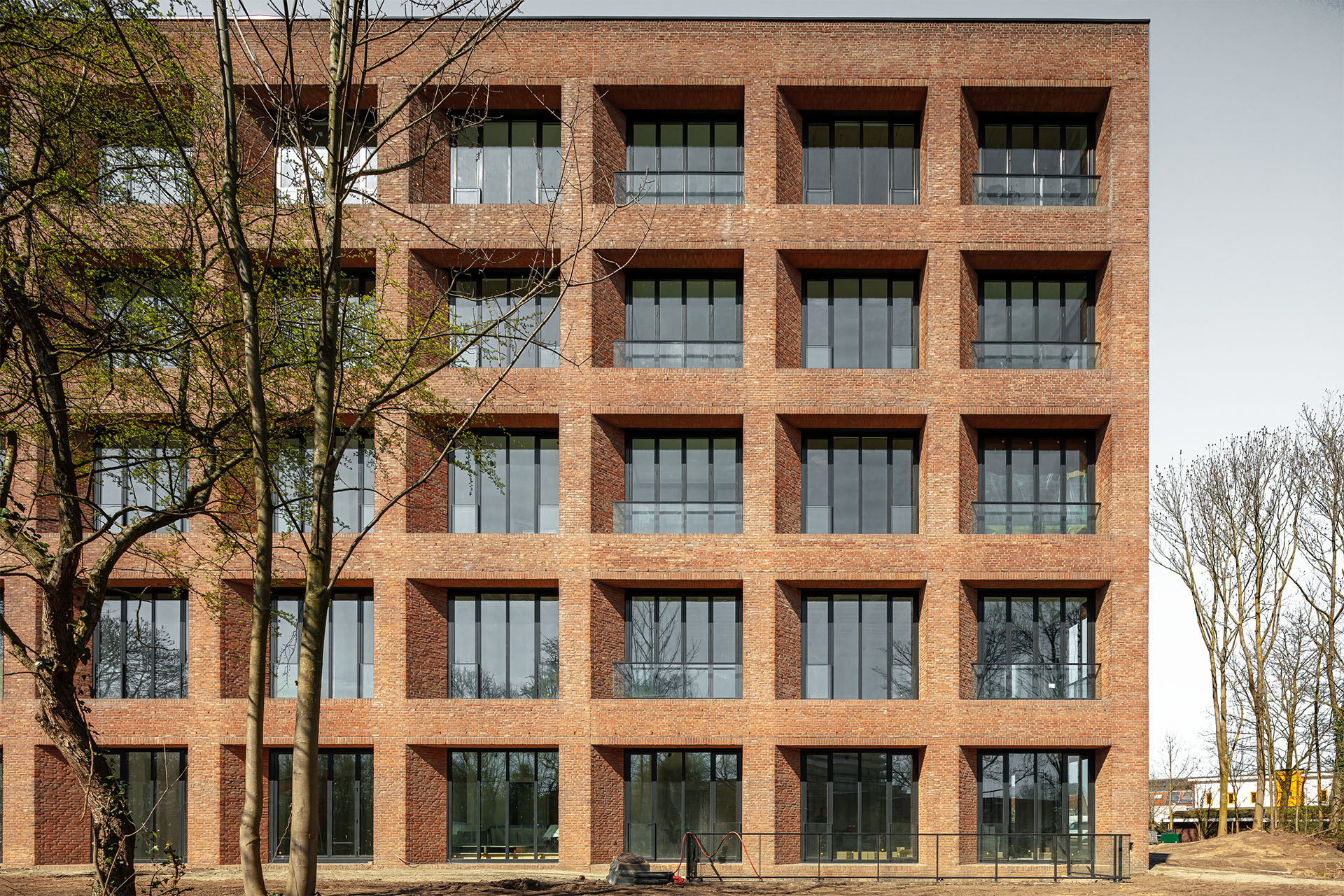
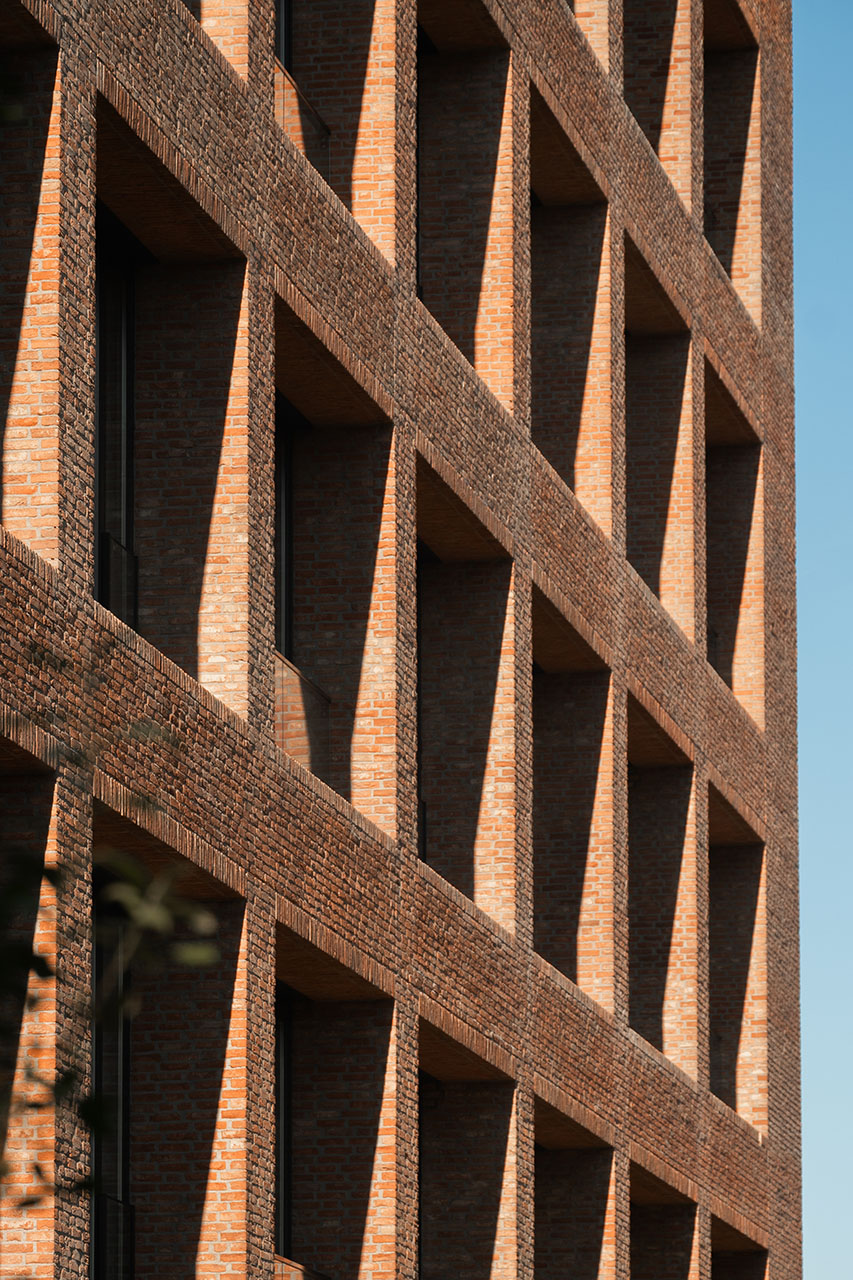
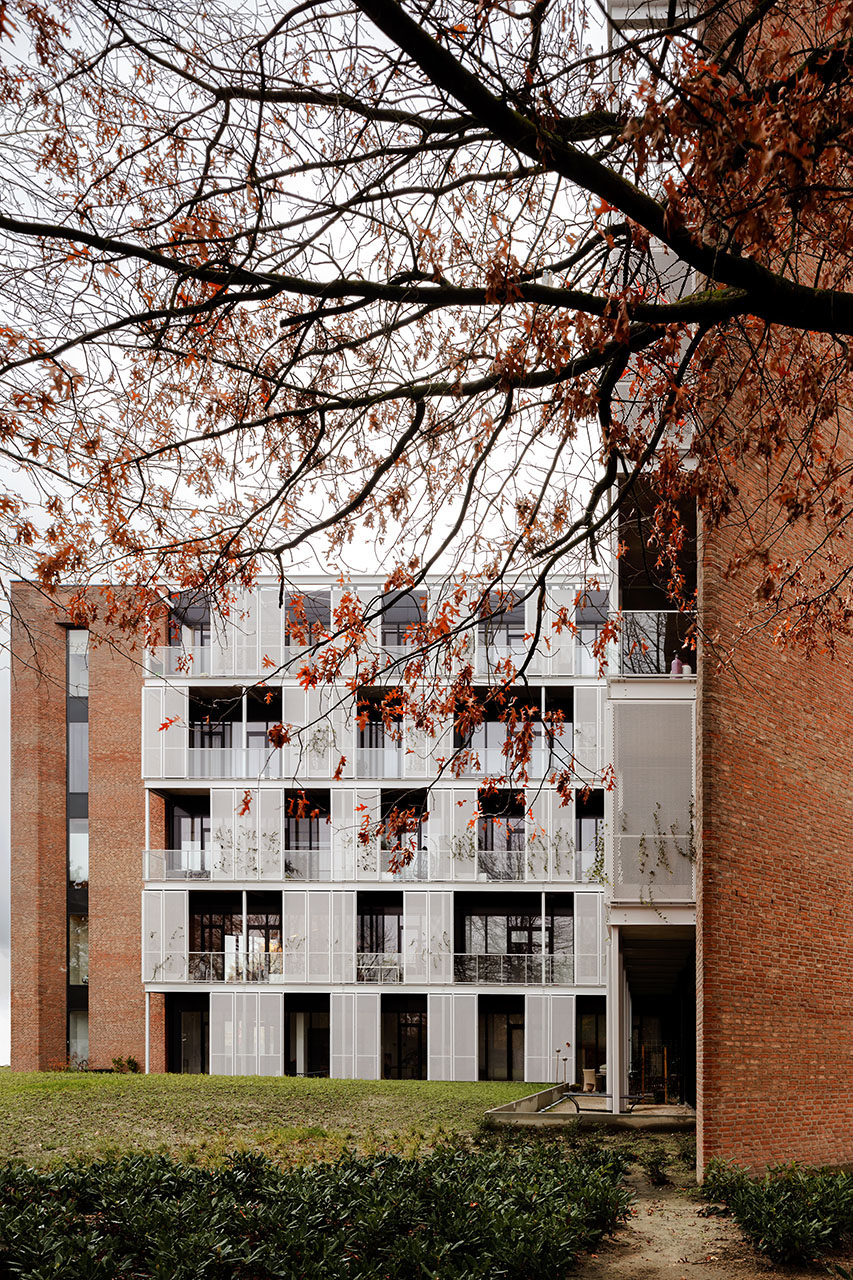
The building is fundamentally a clear cube, positioned in the park with a rotated corner. The façades are constructed in masonry with deep recesses and a uniform composition, giving the building a restrained expressiveness. In contrast, the façade in section has a high-tech appearance in two layers: a fully glazed façade with movable louvers in front serving as sun shading.
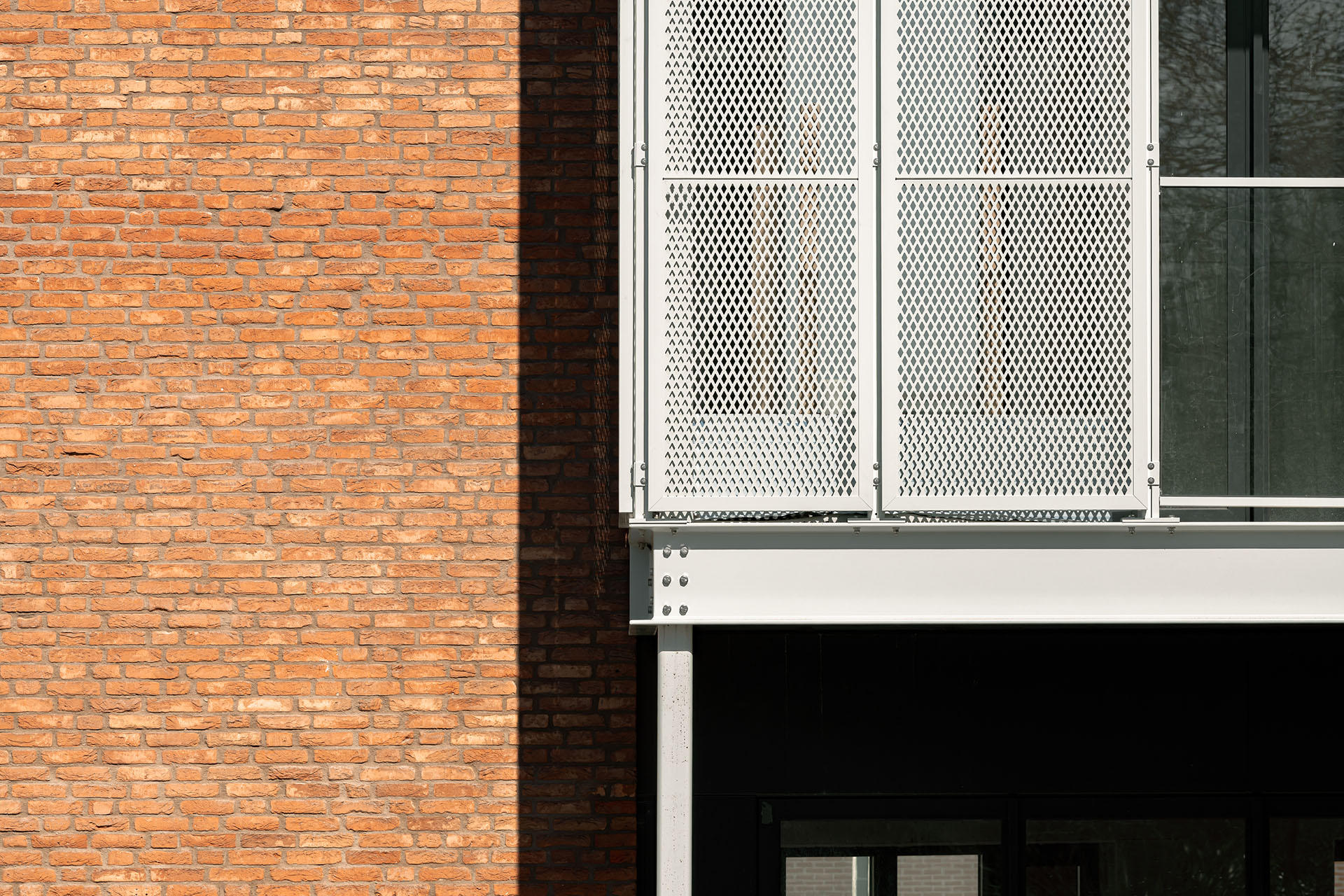
Preserving the building’s distinctive, solitary character and expressive façades has been a key principle. The rational façade, meticulously detailed down to the smallest element, appears simple but is highly skillfully executed. The striking contrast in material, color, detailing, and character between the solid brick outer shell and the airy inner “lining” structure creates its own rhythm, layering, dynamism, and expression.
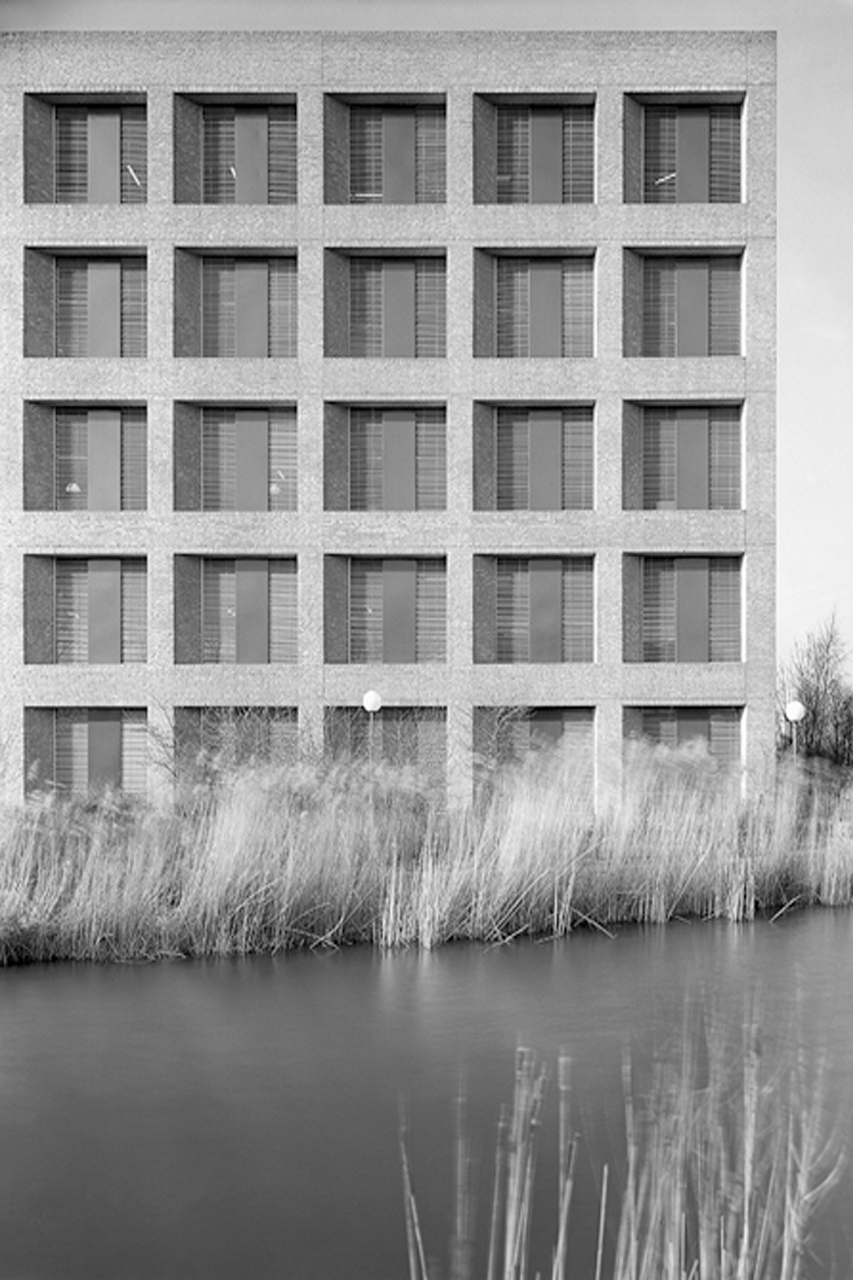
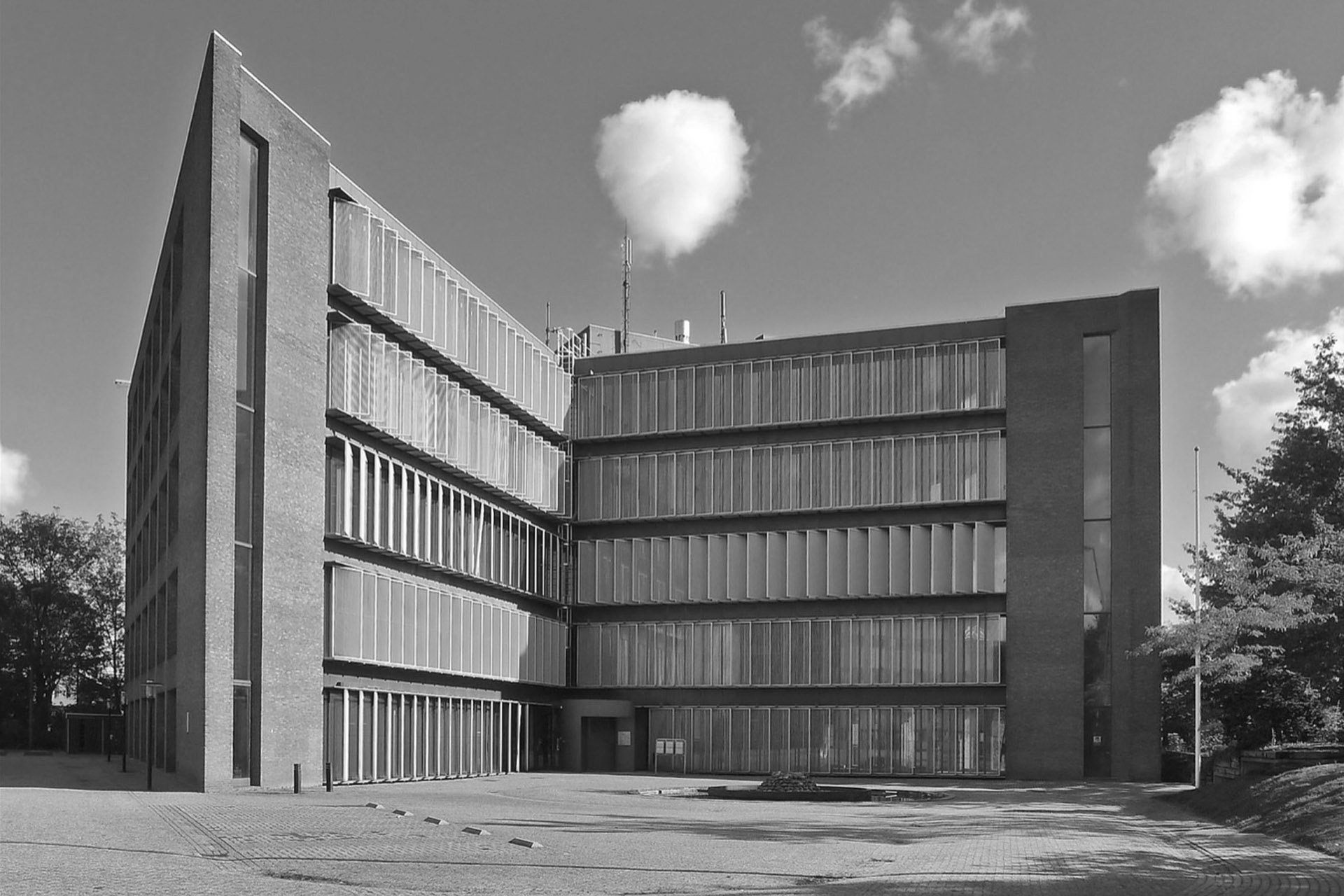
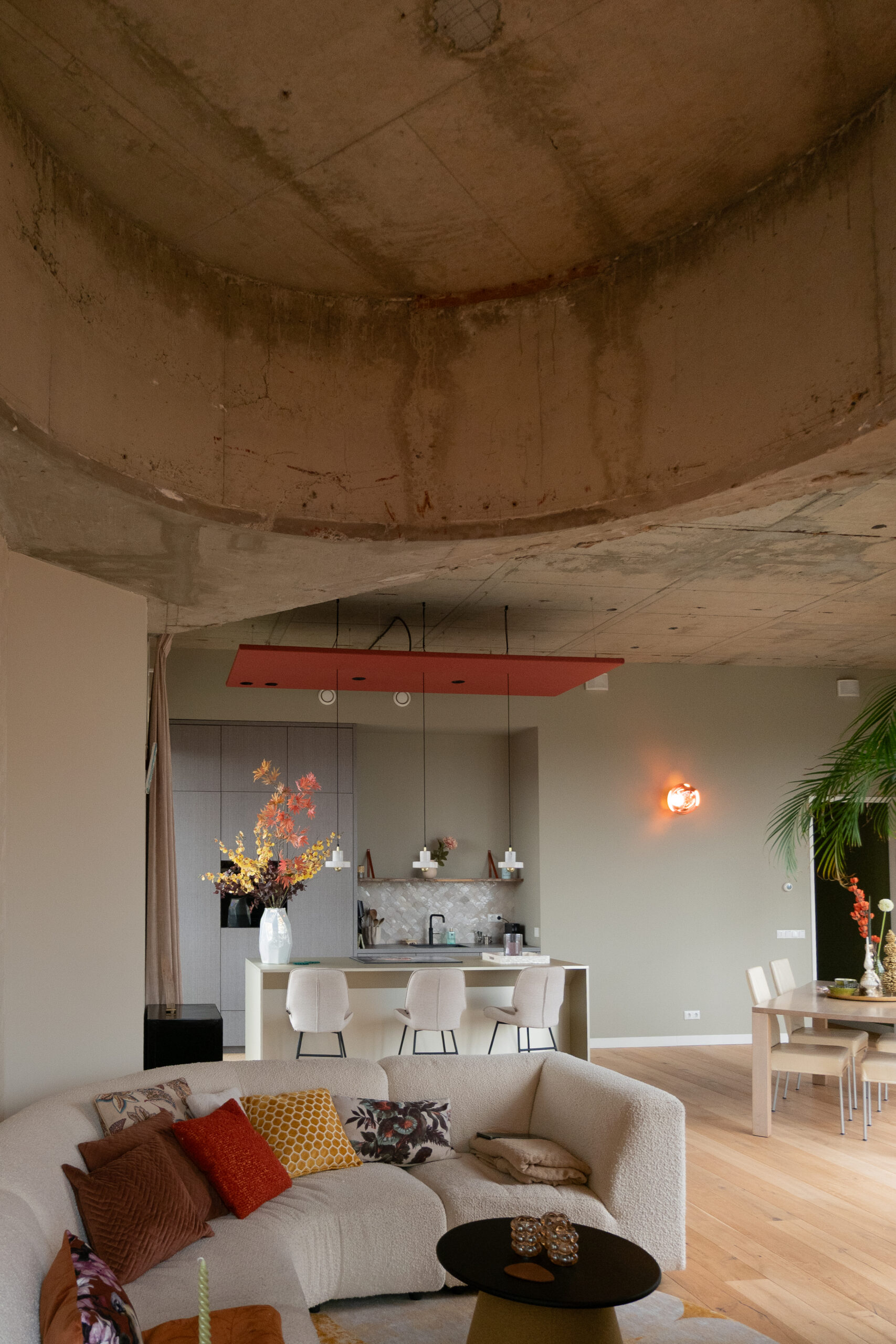
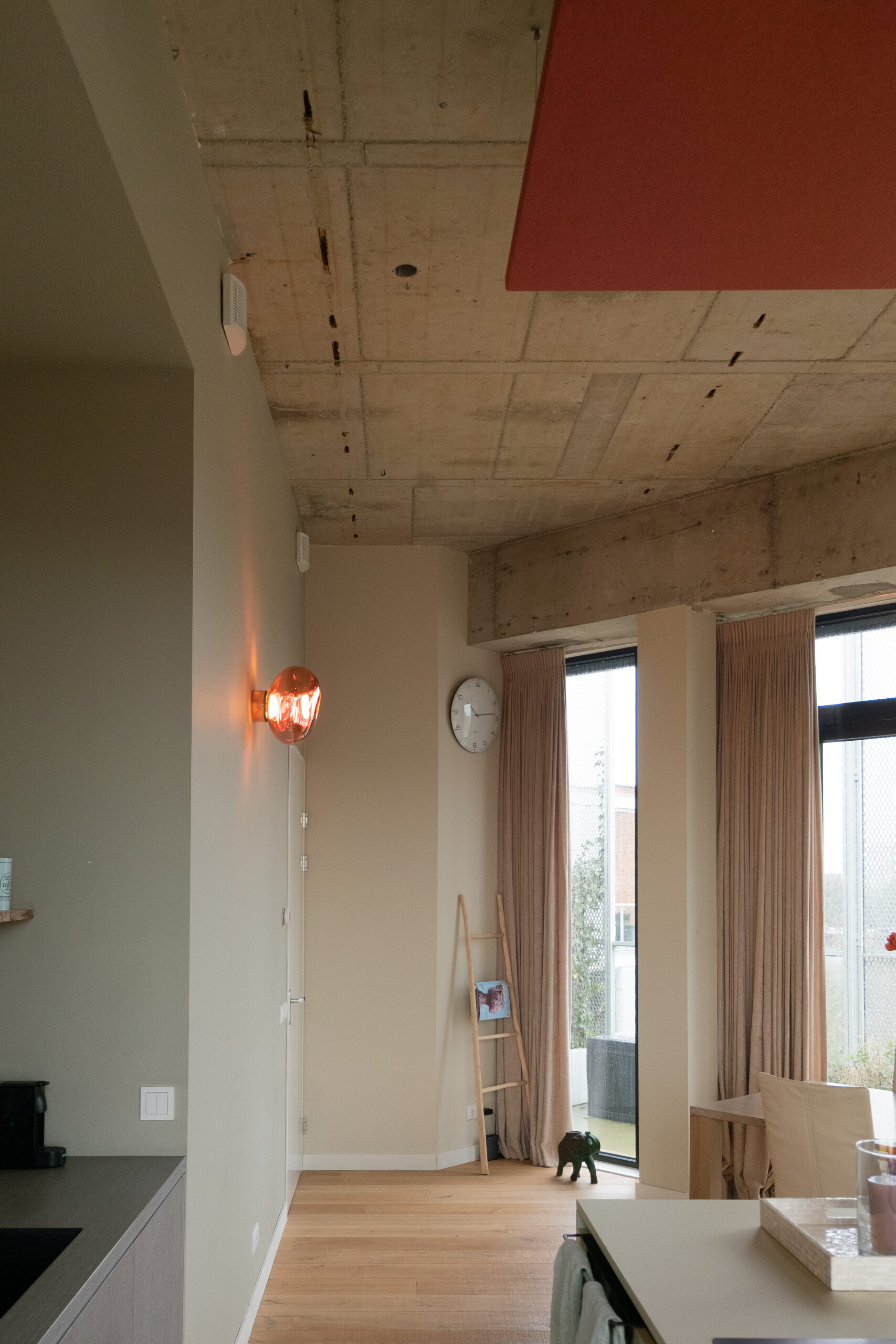
The structure of the façades, cores, and the two main columns forms the basis of the building, while the rest of the floors can be freely laid out. The current office layout, with partition walls and suspended ceilings, contributes little to the building’s character and can be removed. Because the original design was not intended for residential use and the floor heights are nearly 4 meters, the building is well suited for spacious, unique apartments. A key consideration is the integration of outdoor spaces along the masonry façades in a way that preserves the expressiveness and rhythm of the exterior.
Transformation
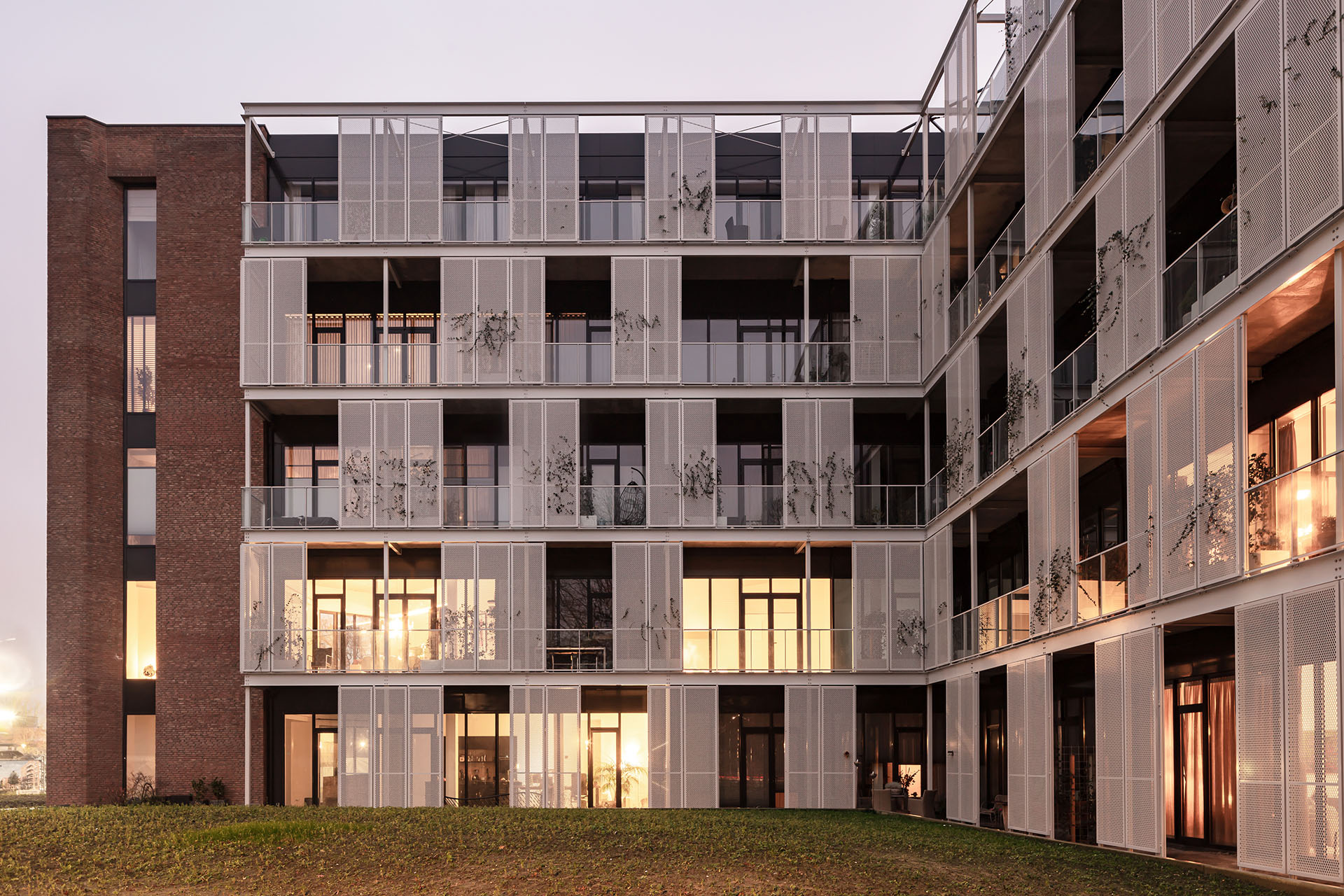
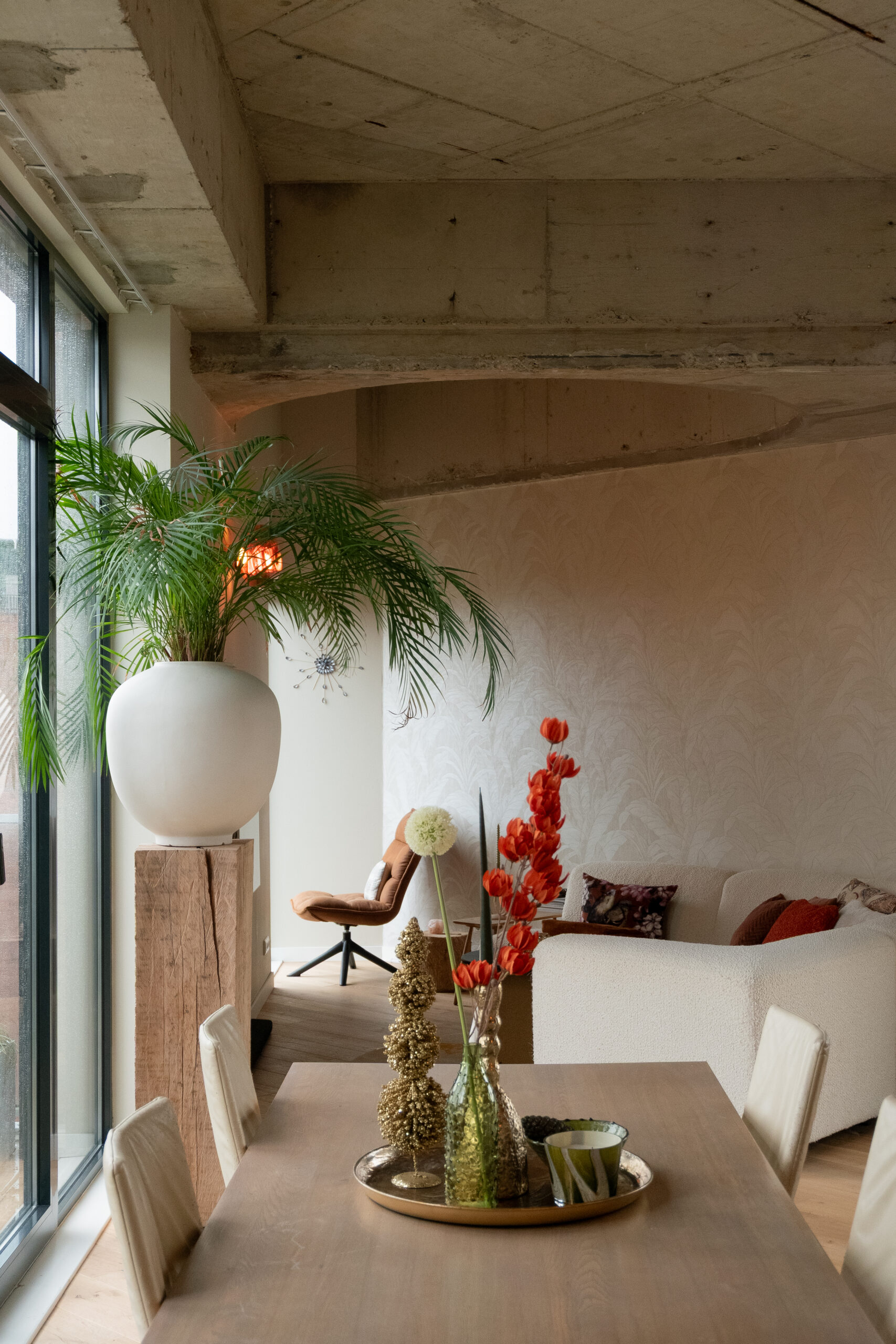
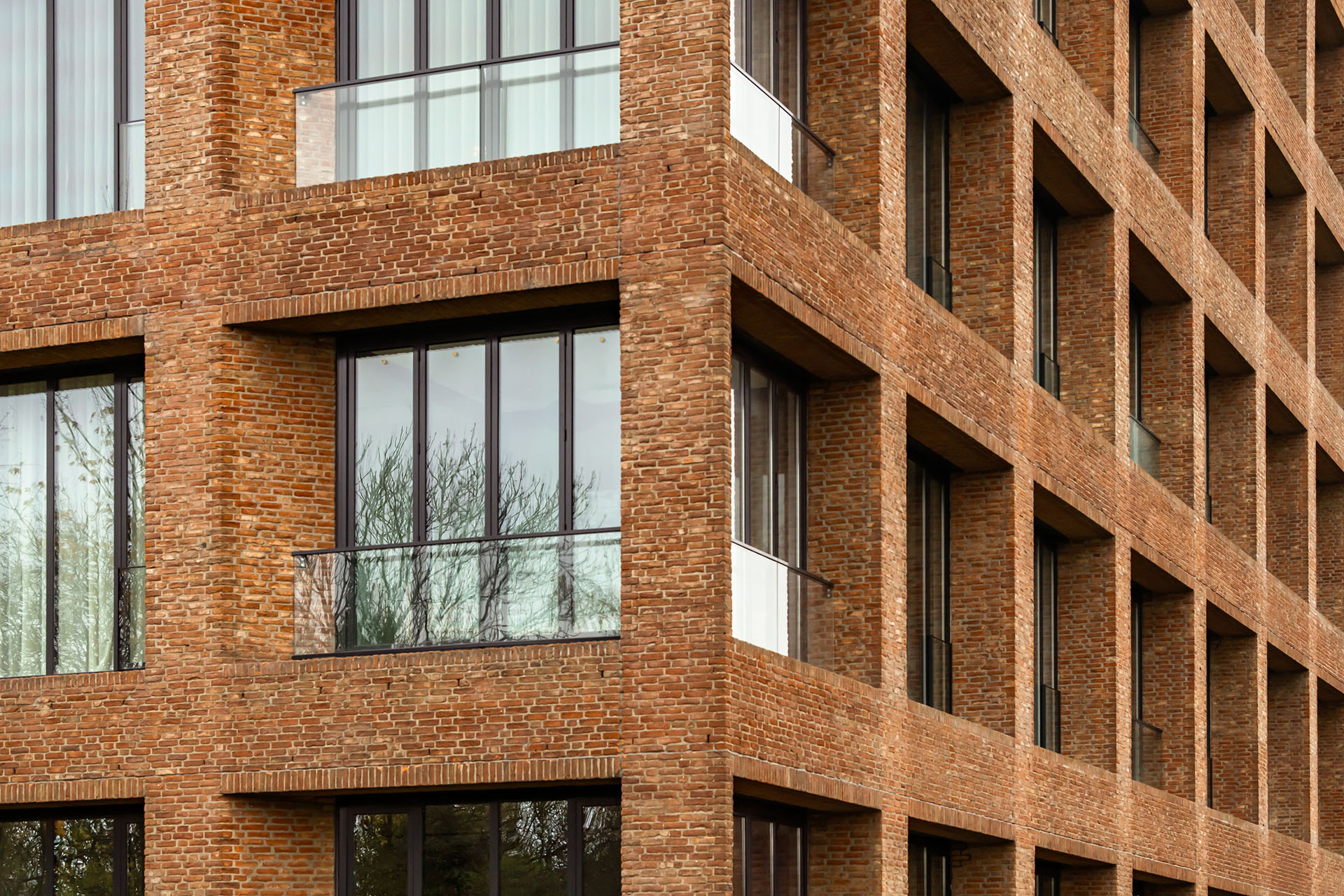
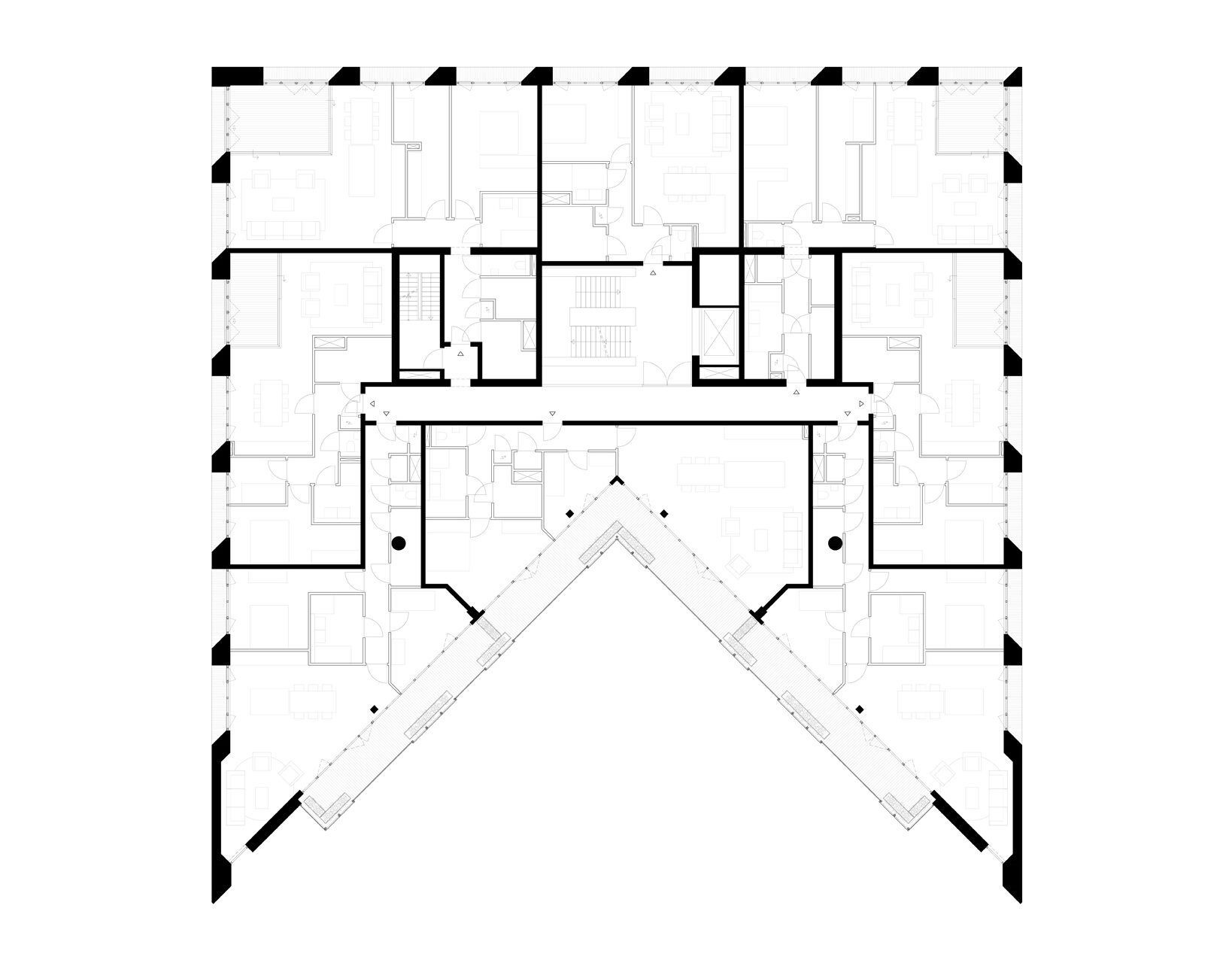
We created a new layout with service functions grouped around the cores and living spaces positioned along the façades. This approach allows for a great diversity of apartments, enhanced by activating both the basement and the roof. In total, we arrive at 23 different types across 39 apartments, ranging from 60 to 150 m². The sharp corners of the building lead to unique typologies and floor plans. Outdoor spaces along the masonry façades are proposed—following Wim Quist’s suggestion—as winter gardens on the corners and at other locations where needed. For the sectional façade, these outdoor areas will also serve as sun shading, becoming an integral part of the new façade. Greenery will be integrated here as well, another idea from Quist.
In the original urban design, Cosun 1 / Suikerunie marked the end of a route, with the sectional façade opening toward the entrance. In the new plan, the park is no longer experienced as a single route but as part of a larger ensemble with multiple directions and paths. The west façade therefore becomes a clearer and more functional main access point. The sectional façade still opens up visually, but its function is now more private, oriented toward views and outdoor spaces.
The entire building has a basement, which can partially serve as storage and technical rooms, but is also large enough to be incorporated into the apartments, allowing for double-height units with mezzanines. The roof will also be activated: it offers beautiful views and is currently unused. Existing roof structures will be replaced with a single, lower volume. Five apartments on the fourth floor will have access to this roof, providing an additional level and an accessible roof terrace. The roof extension will be constructed in metal with a louvered façade, making it subordinate to the main building while referencing its color and rhythm.
Façades
The façades of the masonry building originally featured triple-glazed panels, which were uncommon at the time of construction. However, these panels had no operable sections and were assembled in a way that made modification impossible. They will be replaced by new, floor-to-ceiling frames divided into four sections. In the design, there are three types of panels: fixed glass, panels with operable sections, and folding panels for the winter gardens. The profiling and appearance of all types are carefully designed to look identical, ensuring a calm and consistent façade, similar to the existing situation.
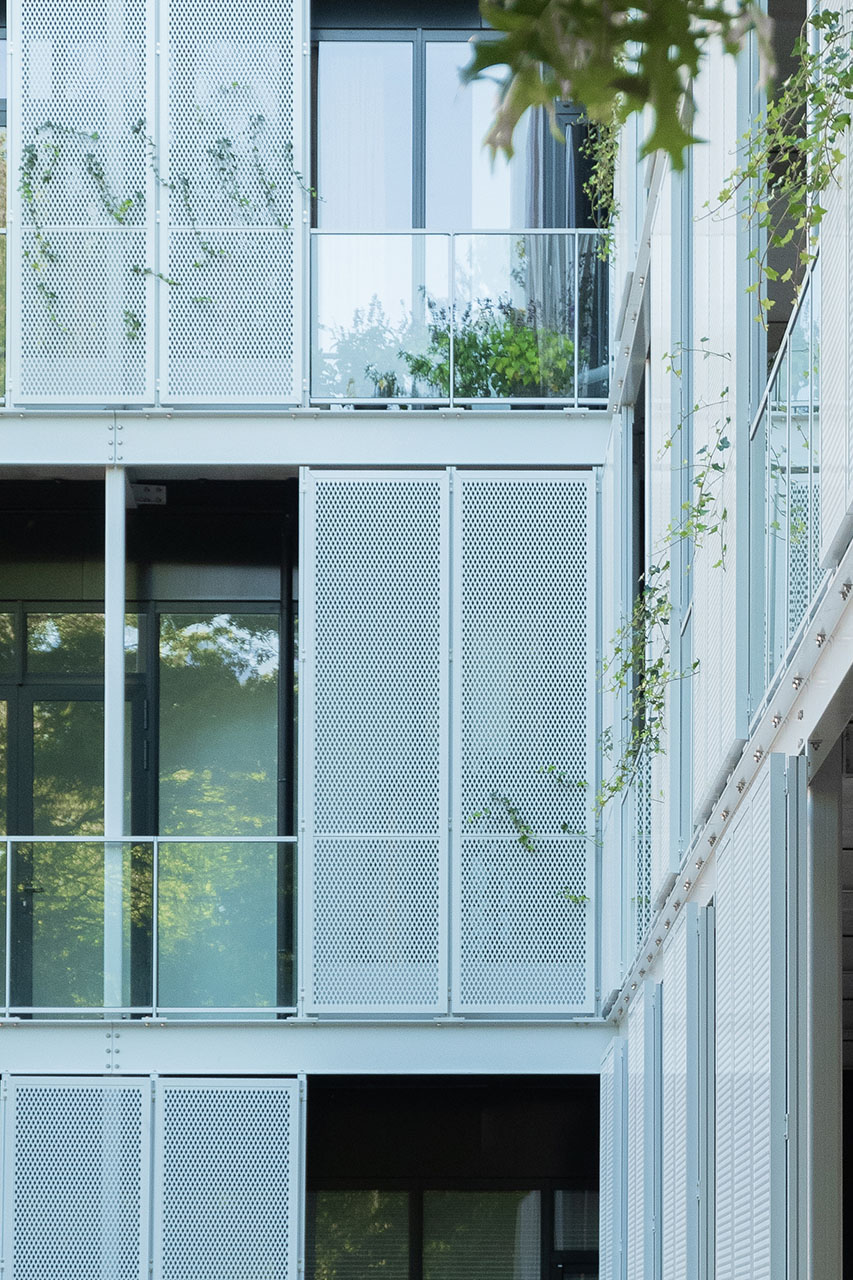
The current sectional façade is characterized by its layering, detailing, and high-tech appearance, contrasting with the craftmanship of the masonry. We intend to preserve this contrast: a new open façade will be created following the same rhythm as the existing one. The structure that supports the existing louvers will be used to add a second layer in the form of perforated steel screens. These screens can be used by residents to grow plants, creating a pleasant green interior space that contrasts with the solid masonry façade.
Sustainability
Transformations are generally subject to lower energy performance requirements than new construction. However, by using smart building systems and ground-based heat and cold storage, we are able to meet new-build standards.
More importantly, the greatest sustainability lies in the long-term reuse of the building. Its functional flexibility allows for layouts to be adapted over time, and its unmistakable architectural quality ensures that there is no temptation to demolish it. In our view, this is the most sustainable approach of all.
Project information
Partners
landscape design
Buro Beuk
contractor
Ouwehand Bouw
constructor
H4D
advisor installations
Huygen Installatie Advies
advisor building physics
Cauberg Huygen
photographs
Sebastian van Damme
photographs
Anouk Muller